

Santa Susana Field Lab’s
Wildlife

NEWS

Toxic-free welcome required.
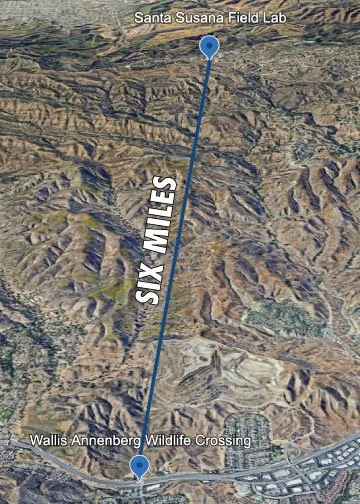
The Wallis Annenberg Wildlife Crossing is a historic victory for the wildlife of greater Los Angeles—but it leads directly to the Santa Susana Field Lab.
The Santa Susana Field Lab is one of California’s most toxic and radioactive sites, sitting in the hills between Simi Valley and Los Angeles. After decades of meltdowns, spills, fires, and dangerous waste practices, it remains heavily contaminated today.
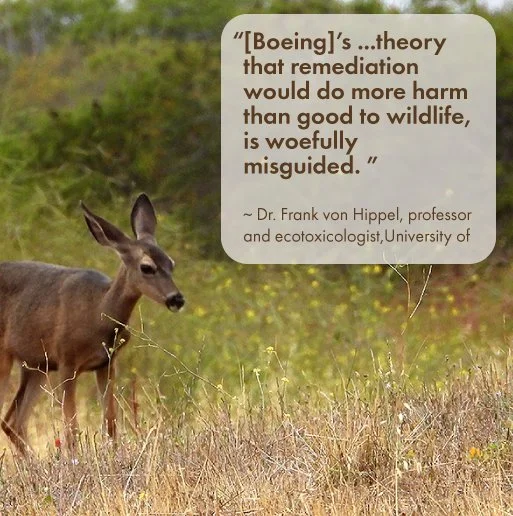
We’ve invested so much to help wildlife safely cross the 101 Freeway—shouldn’t we also protect them from toxic chemicals waiting on the other side? A complete “background” cleanup, removing all man-made pollution , is not only possible, it’s required under past agreements. But Boeing’s current plan would leave most of the contamination behind to save money.
That contamination doesn’t stay put. Toxic chemicals, heavy metals, and radioactive waste will continue to spread—through soil, water, and the food chain—harming wildlife for generations to come.
Our wildlife cannot recover from that kind of exposure. And we cannot call this conservation if we leave poison in their path. It’s time for Boeing to do the right thing: fully clean up the Santa Susana Field Lab.
Sensitive, Threatened, and Endangered Species at the SSFL

FEDERALLY ENDANGERED SPECIES:
Bird: Least Bell's Vireo (Vireo bellii pusillus)
Butterfly: Quino Checkerspot (Euphydryas editha quino)
Plant: Lyon's pentachaeta (Pentachaeta lyonii)
Plant: Braunton's milk-vetch (Astragalus brauntonii)
Crustacean:Riverside fairy shrimp (Streptocephalus woottoni)
FEDERALLY THREATENED SPECIES:
Amphibian: California red-legged frog (Rana draytonii)
Crustacean:Vernal pool fairy shrimp (Branchinecta lynchi)
Bird: Coastal California gnatcatcher (Polioptila californica californica)
Plant: Spreading navarretia (Navarretiafossalis)
Plant: California Orcutt grass (Orcuttia californica)
Plant: Conejo dudleya (Dudleya abramsii ssp. parva)
Plant: Santa Monica Mountains dudleya (Dudleya cymosa ssp. ovatifolia)
Plant: Marcescent dudleya (Dudleya cymosa ssp. marcescens)
FEDERALLY LISTED THREATENED SPECIES CANDIDATE:
Plant: San Fernando Valley spineflower (Chorizanthe parryi var. fernandina)
CALIFORNIA ENDANGERED SPECIES:
Plant: Santa Susana Tarplant (Deinandra minthornii)
CALIFORNIA FISH AND GAME: FULLY PROTECTED SPECIES
Mammal: Ring-tailed cat (Bassariscus astutus)
CALIFORNIA SPECIES OF CONCERN
Reptile: Coast Horned Lizard (Phrynosoma blainvillii)
Reptile: Two-striped Garter Snake (Thamnophis hammondii)
Bird: Loggerhead Shrike (Lanius ludovicianus)
Plant: Plummer’s Mariposa Lily (Calochortus plummerae): CNPS List 1B species
Plant: Slender Mariposa Lily (Calochortus clavatus var. gracilis) CNPS List 1B.2 species

Tevin Schmitt
Wishtoyo Foundation Watershed Scientist
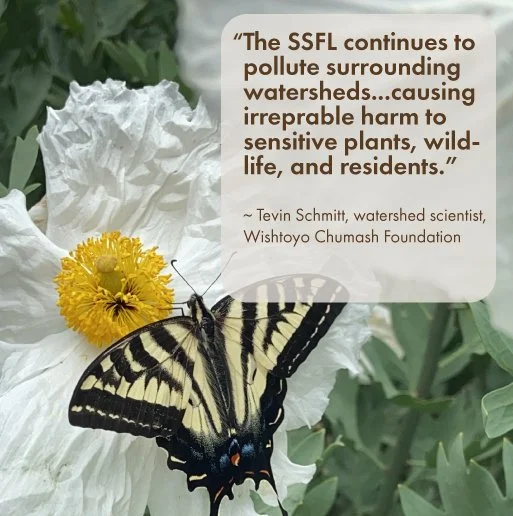
“The watersheds surrounding the SSFL are home to sensitive and endangered amphibian species, which are particularly sensitive to endocrine disruptors, metals, and other waterborne contaminants.”
Chlorinated solvents
TCE (Trichloroethylene)
PCE (Tetrachloroethylene)
Carbon tetrachloride
1,1,1-TCA
PFAS (“forever chemicals”)
Benzo(a)pyrene
Chrysene
Fluoranthene
Naphthalene
Dioxins and furans
TCDD (dioxin TEQ listings)
Octachlorodibenzo-p-dioxin
2,3,7,8-TCDD equivalents
SSFL Persistent Contaminants
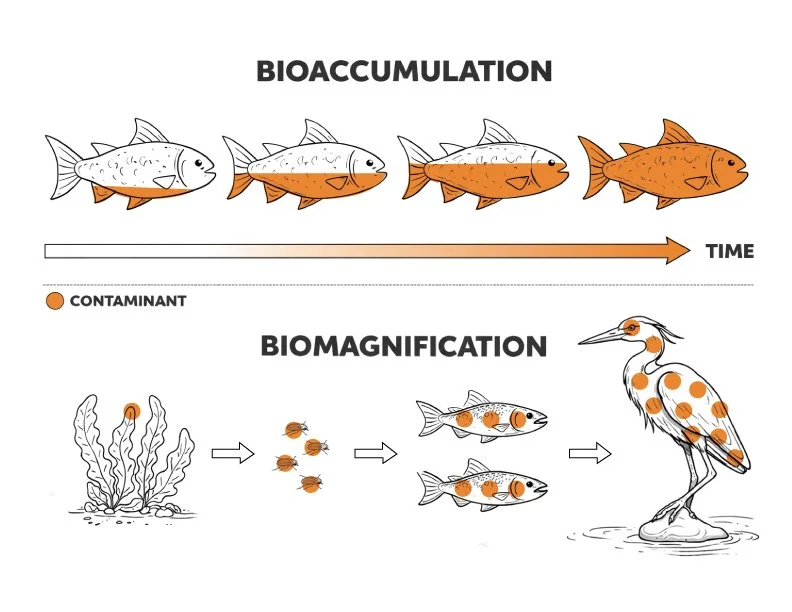
Some of the pollutants detected the Santa Susana Field Lab (SSFL) are “persistent contaminants,” including several “forever chemicals.” These pollutants don’t break down easily in the environment and may build up in wildlife through bioaccumulation and biomagnification processes.
Bioaccumulation: The buildup of a chemical in a single organism over time as it absorbs more than it can eliminate.
Biomagnification: The increase in a chemical’s concentration as it moves up the food chain, resulting in higher levels in predators.
PCBs (polychlorinated biphenyls)
Aroclor 1016, 1221, 1232, 1242, 1248, 1254, 1260
Coplanar PCB TEQ listings
Organochlorine pesticides
DDT, DDE, DDD
Chlordane
Dieldrin
Endosulfan
Heptachlor
Lindane (gamma-BHC)
Mirex
Toxaphene
Perchlorate
Perchlorate
Radioactive persistent environmental contaminants:
Cesium-137
Strontium-90
Plutonium-239
Uranium (U-238)
Tritium
Heavy metals
Lead
Mercury (including methylmercury)
Cadmium
Chromium (including hexavalent chromium)
Nickel
Arsenic
Beryllium
Thallium

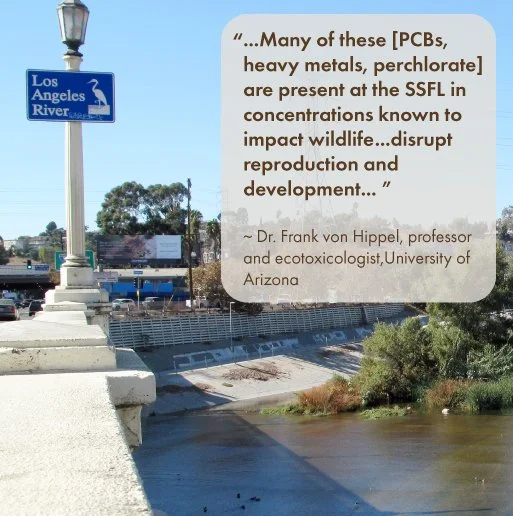
Dr. Frank von Hippel
Ecotoxicology professor in the Northern Arizona University Department of Biological Sciences
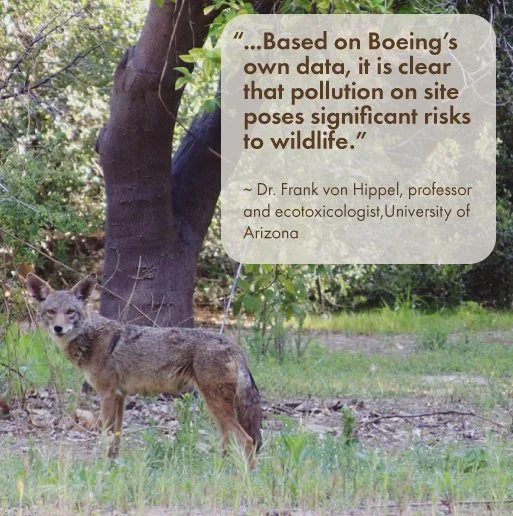
“If the SSFL property is not safe for people, then it certainly is not safe for much of the wildlife.”
Least Bell’s Vireo

The Santa Susana Field Lab is home to the Endangered Least Bell’s Vireo, a shy songbird.
A study on the Pollution-related changes in diets of two insectivorous passerines is especially relevant to the Least Bell’s Vireo living in the Santa Susana Mountains.
In the study, two insectivorous birds were studied, living in areas polluted by a copper smelter. They examined the quality of food the birds gave to their young and their breeding performances. They did not find any differences in feeding frequencies or the amount of food that the parents provided their young. But the food quality was different. They found that heavy metal pollution affects bird’s breeding performances indirectly, due to the food quality given to their young. The study shows the importance of secondary environmental changes, like food quality, in addition to the direct impacts of pollutants.
Our local birds should be protected from the SSFL’s heavy metal contamination, in addition to toxic chemicals and radioactive waste.
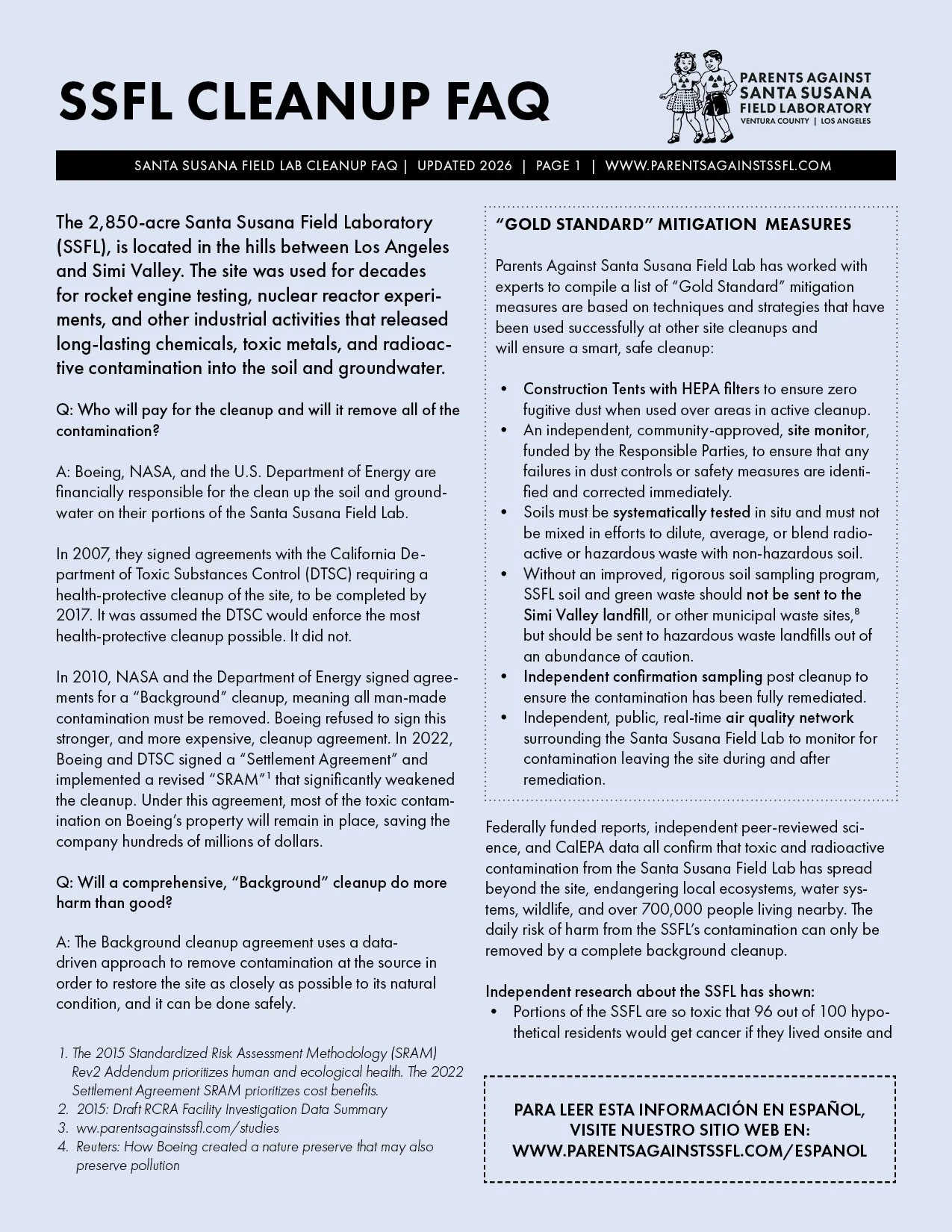
Santa Susana Field Lab Cleanup Facts Sheets
LEARN MORE
Biological Mitigation Measures